


In her professional working life, Pilar was a librarian at the National Library in Madrid, combined with teaching. She wrote a brief history of Toledo for visitors to the city a few months ago. What made this walled city so important? How did it include three religions in one small city? Read on to learn about this UNESCO world heritage site.
TOLEDO: Cultural and Scientific Centre in the Middle Ages
Pilar Martín, Madrid, Spain
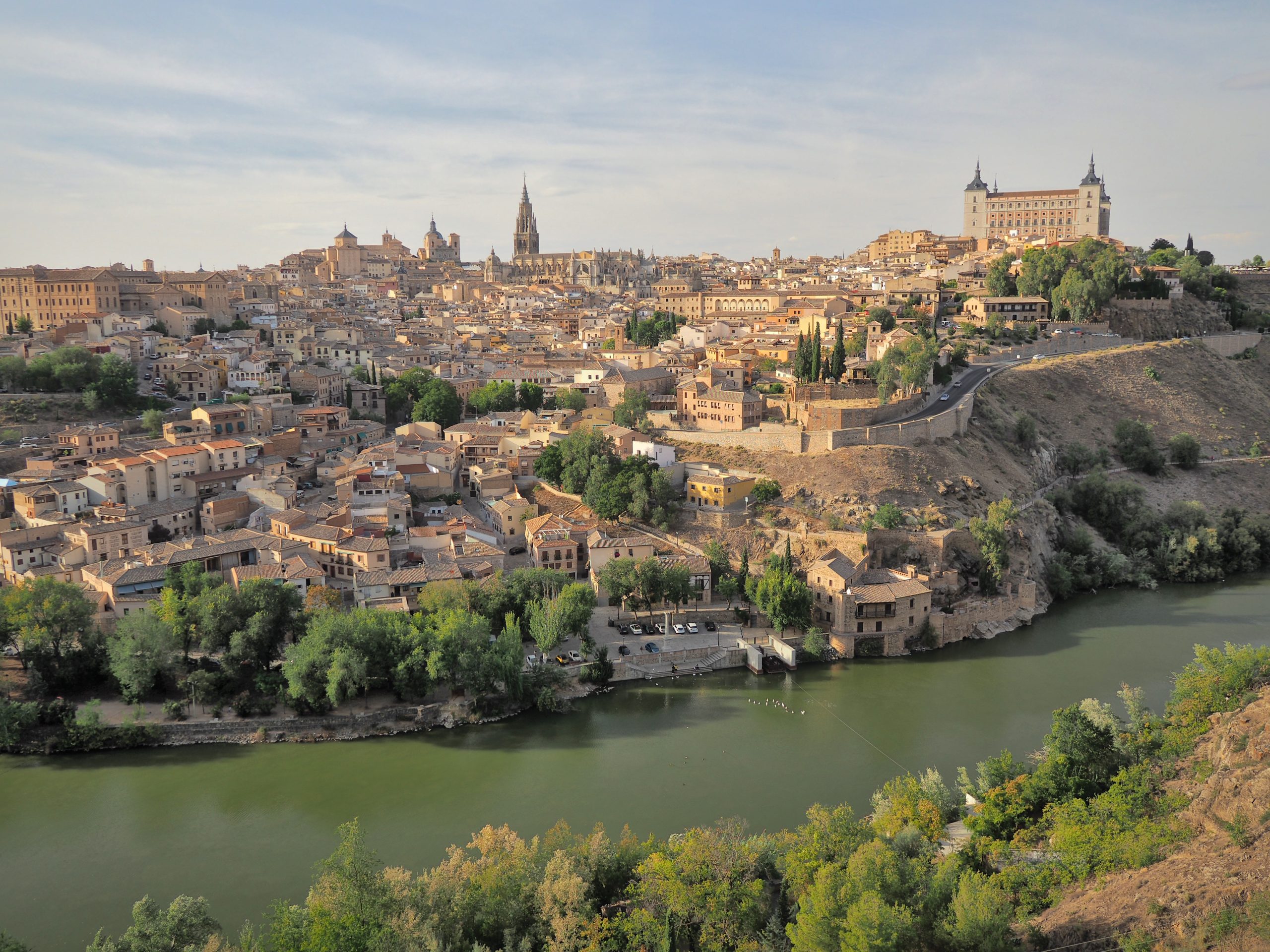
Approximately 72 kilometres south of Madrid, the capital of Spain, perched atop a hill and encircled by the River Tagus, lies the city of Toledo. Previously the Romans knew it as Toletum and to the Muslims as Tulaytula. Its geostrategic location at the heart of the Iberian Peninsula—well connected by ancient Roman roads and situated alongside the river— likely contributed to its political prominence as the capital of the Visigothic Kingdom for nearly three centuries and, later, during the Middle Ages, as a major cultural and scientific centre.
How did knowledge spread from Baghdad to Córdoba and from there to Toledo?

The Muslim invasion in 711 led to the conquest of almost the whole Iberian Peninsula, which came to be known as Al-Andalus, with its capital in Córdoba. It initially began to operate as an emirate dependent under the authority of Damascus, and in the 10th century, Abd al-Raḥman III proclaimed himself caliph, independent of Baghdad.
The connection with the eastern caliphate— first political and subsequently cultural—was manifest. In the second half of the 8th century, during the reign of the caliph al-Manṣūr in Baghdad, a great patron of learning, an Indian delegation delivered to the caliph a manuscript in which he had shown considerable interest. This work, known among the Arabs as the “Great Sindhind”, was nothing else than the “Brahma sphuṭa siddhanta, composed in the form of a rhymed Sanskrit poem by its author and compiler, Brahmagupta. It was a mathematical treatise reflecting on the properties of zero, among other scientific and astronomical matters. The caliph ordered it to be translated into Arabic at the House of Wisdom, the great library and intellectual centre of Baghdad, thereby initiating the translation movement of Greek, Persian and Indian works into Arabic.
These translations were subsequently transmitted to Córdoba, then to Toledo, and from there to the rest of Europe. The Arabic version of Brahmagupta’s text, produced by the Persian mathematician Al-Khwarizmi, would in turn be translated in Toledo into Hebrew and Latin.
Who and what contributed to Toledo becoming a centre of learning in the Middle Ages?
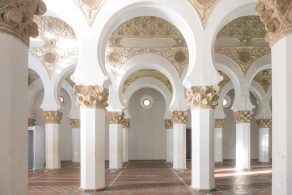
This development was influenced by the demographic diversity of the region, which comprised three religious traditions: Christians, Muslims, and Jews, the latter forming a substantial group that gradually established itself in districts known as juderías. This situation gave rise to a marked linguistic pluralism.
The relatively peaceful coexistence of these groups, supported by Christian monarchs engaged in the Reconquista of territories under Muslim rule, fostered sustained scientific and cultural activity over the centuries. Hence the designation of Toledo as the “City of the Three Cultures”, reflecting this coexistence.
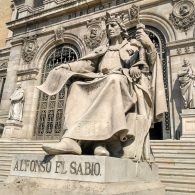
Among the Christian monarchs who, in one way or another, most actively supported this cultural movement, particular mention should be made of Alfonso VI, who conquered Toledo in 1085, and, in the 13 century, Alfonso X the Wise—both sovereigns of the Kingdom of Castile-León.
How did Toledo come to be the most important centre of science, and why?
After the dissolution of the Caliphate of Córdoba, the entirety of Muslim-held territory fragmented into a series of small kingdoms known as Taifas, among which the Taifa Kingdom of Toledo emerged as one of the most significant.
Its King, al-Mamun, a great patron of learning, attracted eminent intellectuals from a wide range of disciplines. As Córdoba declined in importance, Toledo gained access to the vast Islamic library of the caliph Al-Hakam II, which is said to have comprised some four hundred thousand volumes, many of them Arabic translations of Greek authors, as well as works arising from contact between the Islamic and Indian worlds, where the sciences and letters had reached levels of development largely unknown in the Western world.
Toledo thus became the principal cultural centre of both Spain and Europe, building upon the already significant tradition of translation that had been previously established in Córdoba and from there evolving into a major hub of scientific activity.
Who were the leading intellectuals of the 11th century in Toledo?
The king al-Mamun, who governed the Taifa of Toledo, transformed the city into a major of cultural and scientific centre. Among the notable figures of this period was the Toledan Ibn Wafid, who amassed an extensive medical knowledge and was also a distinguished philosopher and botanist. He possessed a profound knowledge of the works of Galen, whose teachings he drew upon in his own medical treatises, as well as a deep familiarity with the writings of Aristotle and other philosophers.
By the king’s command, he established a botanical garden, known as the Huerta del Rey, where he conducted research into the cultivation and acclimatisation of medicinal plants. One of his principal works is the “Kitab al-Adwiya al-Mufrada” (“The Book of Simple Medicines”), a treatise on the therapeutic use of substances of plant, mineral, or animal origin.
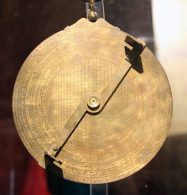
Another eminent scientist was Azarquiel, a nickname inspired by his striking blue eyes. He was famous for his skill in goldsmithing, and he crafted precision scientific instruments, such as astrolabes for determining the position of the stars. He also invented the azafea, an instrument that allowed astronomical observation at any terrestrial latitude and represented an improvement on the astrolabe. One of his most notable contributions is the “Toledan Tables”, which provided calculations of the positions of the planets.
What was the Toledo School of Translators?
In the 12th century, Raimundo de Sauvetat, Archbishop of Toledo, founded what is currently known as the Toledo School of Translators, which would later achieve its greatest renown under the patronage of Alfonso X of Castile.
Their aim was to produce Latin and Castilian translations of scientific and philosophical Arabic works, which were in such high demand in Christian Europe.
Arab, Jewish and Christian scholars collaborated on these translations. The Arabic texts being translated were particularly valuable as they transmitted the thought of the great Greek authors, such as Plato, Aristotle, Ptolemy, Euclid, Hippocrates, etc., which had been almost forgotten in medieval Europe. Although the original had been lost, yet the Arabic translation remained.
Who were Toledo’s most distinguished translators?
The School of Translators attracted numerous scholars and intellectuals from the medieval Christian world, such as Adelard of Bath and Daniel of Morlay from England, and the Scotsman Michael Scot, among many others.
During the 12th century, one may also mention Domenicus Gundisalvi, who focused on the translation of philosophical and medical works by Avicenna, such as the “Summa Avicenne de convenientia et differentia scientiarum”, and by al-Farabi, such as the “Catalogus scientiarum”.
The most significant figure, owing to his vast body of translation work, was the Italian Gerard of Cremona. His translations from Arabic into Latin spanned a wide range of disciplines: mathematics, astronomy, medicine, astrology, alchemy, geomancy, and and more. Among the most notable are the “Liber Almagesti” of Ptolemy; the “Liber alchoarismi de algebra et almucabala” of al-Khwarizmi; and Galen’s “De simplicibus medicamentis”, among many others.
In the 13th century, Alfonso X the Wise transformed Toledo into the cultural capital of Europe. During his reign, translation activity continued apace, while numerous works of far-reaching significance were also composed in the Castilian language.
Among the translators, Yehuda ben Moshe ha-Kohen stands out. He translated Azarquiel’s “Azafeha” into Latin, and, under royal patronage, translated the “Lapidario”—a treatise on the magical properties of stones in relation to astrology—from Arabic into Castilian. Another notable work is the “Libro de las cruzes” (“Book of crosses”), an astrological treatise encompassing the significance of the planets.
The most eminent Jewish scholar at the School was Rabbi Ishaq ben Sid, known as Rabiçag. He contributed to the compilation of the astronomical treatises within Alfonso X’s literary corpus, such as “Libro del saber de astronomía” (“Book of Astronomy knowledge”), as well as to the so-called “Alfonsine Tables” for calculating the positions of the planets. To this end, the king ordered the installation of an astronomical observatory in Toledo, at the castle of San Servando.
Similarities between the House of Wisdom in Baghdad and the School of Translators in Toledo
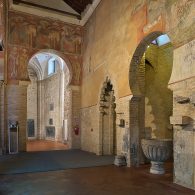
Although they emerged in different periods, both were established with the aim of transmitting knowledge between different civilisations. Due to the contact of the Arabs with the various peoples brought under the Abbasid Caliphate, and to the caliphs’ desire to gain access to the knowledge and sciences of these societies, scholars from numerous disciplines gathered in the House of Wisdom to translate into Arabic the entirety of learning preserved in Persian, Indian and Greek texts, including those of Pythagoras, Aristotle, Hippocrates, Euclid, Plotinus, Galen, Brahmagupta, among others.
In a similar way, the School of Translators of Toledo pursued comparable objectives: to disseminate the knowledge and sciences in which the Arabs excelled – such as philosophy, astronomy, medicine and mathematics – and to recover Greek and Latin learning which had been translated into Arabic, but whose original texts had been lost. In summary, many works by great thinkers and scientists were translated, first into Latin and subsequently into Castilian.
Baghdad and Toledo became centres of cultural diffusion and attracted numerous scholars, regardless of their nationality or religion. The flourishing of the intellectual revival in both institutions is closely associated with the presence of a wise ruler in power.
Through the School of Translators in Toledo, and thanks to translations into Latin and the Romance languages, the Western world gained from the Islamic world an exceptional cultural and scientific legacy, which played a very important role in the European Renaissance.
Interested to see a bit more of Toledo? Watch this video:
https://www.youtube.com/watch?v=lyflpPbLIIs
Enjoyed this article? Read another like this: Yosemite, Where Rocks Breathe